

The Anatomy of the Ultimate Trouser: Why Fit is the Secret to Sustainable Style
Ask any stylist which single garment makes or breaks an outfit, and they will say the trouser. You can cover the wrong shirt with a jacket. You can hide a tired knit under a scarf. You can distract from a dress with good earrings and a confident lipstick. But a bad trouser is a bad outfit, full stop. A wrong rise, a thin fabric, a baggy seat, a gaping waistband and your whole silhouette collapses before you leave the house.
The trouser is also, by a long way, the hardest garment for the fashion industry to get right. Fast fashion trousers rarely survive five washes. Sizing is inconsistent. Stretch blends age badly. Hems sit at lengths that suit nobody. And this is before we even talk about the carbon cost, which is significant, because trousers use more fabric than almost anything else in your wardrobe. Getting the trouser wrong once or twice a year is one of the most expensive, highest-impact mistakes a conscious shopper can make.
This guide is about how to get it right. We are going to walk through what makes a trouser genuinely great the rise, the fabric weight, the stretch debate, the waistband, the hem and how to recognise your forever pair when you find it. If you have been chasing the perfect trouser for years, this is the anatomy lesson you were never given in the fitting room.
Why Trousers Are the Hardest Garment to Get Right
A shirt has to fit one area well the shoulders. A dress has to hang from one point the bust or the shoulders. A skirt only really needs to sit at the waist. A trouser, by contrast, has to flatter at least five completely different body zones at once. The waistband has to sit correctly. The rise has to be right for your torso. The hip has to skim, not grab. The thigh needs room without pooling fabric. The hem has to land at a specific millimetre to lengthen the leg rather than cut it. If even one of these is off, the whole thing fails.
This is why most trousers disappoint. High street manufacturers are cutting for a theoretical median body, optimising price, and using elastic content to cover up fit issues. The trouser you buy online has been engineered for an average woman who does not exist. Whether you are six foot or five-two, pear-shaped or straight, with a short torso or a long one, you will feel it in the trousers first.
Once you understand this, you stop blaming yourself for looking bad in a particular pair, and you start looking for trousers that were cut with the intention you recognise. Proper drop from waist to hip. A rise that suits your body. A hem that doesn’t need to be taken up for your real shoes. These are not luxuries. They are the baseline of a trouser that will actually get worn.

The Rise: The Most Overlooked Detail in a Great Trouser
The rise is the measurement from the crotch seam to the top of the waistband. It sounds unglamorous, but it is the single most important number on a trouser label. Low-rise trousers sit below the belly button. Mid-rise sits roughly at the navel. High-rise sits two or three centimetres above it. Each one changes the silhouette entirely.
A high rise is, for most women, a secret weapon. It creates the illusion of a longer leg, smooths the tummy, and defines the waist. Paired with a tucked shirt or a fitted knit, it is almost impossible to fail. A mid-rise suits a body with a long torso, where a very high rise would look stubby. A low-rise currently having a moment again only flatters a narrow range of proportions, and combines poorly with layering because it breaks the vertical line of the body.
The tragedy of the high street is that trousers are often labelled high-rise when the actual measurement tells you they are a generous mid. If you are trying on trousers and the waistband is sitting well below your navel, you do not have a high-rise trouser. You have a marketing description. Always check the rise measurement in centimetres if it is listed. Around twenty-eight to thirty-two centimetres is typical for a genuine high rise on a UK size 10 to 14.
If you find a brand that nails the rise for your body, stay loyal. Try their wide leg, their straight leg, their jean. The same pattern block will flatter across cuts, and you will build a small, coherent collection of trousers that actually all work on you.
Fabric Weight: Why Heavier Isn’t Always Better
Fabric weight is measured in grams per square metre, and it is the hidden code behind trousers that hang beautifully versus ones that cling in all the wrong places. For tailored trousers, you are looking for something in the range of two hundred and fifty to three hundred and fifty grams per square metre. For a denim, three hundred to four hundred is the sweet spot for a jean that skims rather than sticks. Anything thinner is likely to crease at the hip, show the line of your underwear, and lose its shape by midday.
But heavier is not automatically better. A six-hundred-gram wool trouser is beautiful in November and miserable in June. A seven-hundred-gram denim takes weeks to soften and can be stiff across the knee. The question is always: fabric weight relative to season and use. A summer linen trouser should feel substantial enough to drape well without being transparent in the sun. A winter wool trouser should feel cool to the touch but hold its press through a full day of wear. Anything that feels slippery, whispery or surface-shiny is almost always fast fashion synthetic, and it will not last.
Deadstock fabrics, in particular, often come in weights that the high street does not use anymore, because the high street buys the cheapest possible mill weight to hit a price. A responsible brand using deadstock or milled-to-order cloth can afford a denser weave, which is why these trousers simply feel different from the first wear.

The Stretch Debate (And What Sustainable Alternatives Look Like)
For twenty years, the high street has told us that stretch is a feature. Two per cent elastane, five per cent, sometimes ten. Comfortable, they said. Flattering, they said. In reality, stretch is the single biggest reason trousers go out of shape after a handful of wears. Synthetic stretch fibres break down with heat, washing and friction. The trouser that clung lovingly in week one is sagging at the knees by week six, bagging at the bum by month three, and in the charity bag by the end of the year.
Stretch is also a microplastic nightmare. Every wash of an elastane blend releases thousands of tiny plastic fibres into the water system. Over the life of one pair of stretch jeans, this can amount to significant pollution. So the climate-literate answer to the stretch question is: less is more, and none is best.
The sustainable alternative is not uncomfortable trousers. It is better tailoring. A properly cut, rigid or low-stretch trouser in a fabric that has been pre-washed and softened moves with you without needing a plastic thread to do the work. The waistband is shaped to hug without digging. The seat allows movement through the cut of the pattern, not the give of the thread. The thigh has a real drape. Once you have worn a beautifully cut trouser in a rigid fabric, stretch trousers start to feel like cheap leggings in disguise.
If you do need a small percentage of stretch perhaps for commuter wear, or a long flight look for natural elasticity alternatives. Elastomultiester content from bio-based sources, or a small percentage of mechanical stretch woven into organic cotton, performs far better than standard elastane. It is rarely marketed, but it is worth asking.
Why a Tailored Waist Beats a Trend-Led Shape
Shapes will come and go. One year it is the cargo. The next it is the parachute. Then the barrel leg. Then the drop-crotch. Then back to the wide leg. If you build your trouser collection around this season’s silhouette, you will be rebuying every eighteen months, which is bad for your bank balance and worse for the planet.
A tailored waist, on the other hand, is not a trend. It is a construction. A well-tailored trouser has a waistband that sits flat against the small of your back without any gaping, a waistband height that is correct for your proportions, and an internal structure curtain lining, interfacing, proper finishing inside the waistband that means the trouser holds its shape through years of wear. The shapes that are built on top of this engineering can flex with the times, but the backbone stays.
If you look at the trousers that genuinely last in a woman’s wardrobe over decades, they almost always share these characteristics. The waistband is fitted. The rise is honest. The leg line flows cleanly without pulling. And the fabric does not rely on stretch to carry the illusion. Once you know what to look for, you can spot a forever trouser across a room, even before you touch it.
Investing here pays back in a way that is hard to overstate. A great pair of tailored trousers at three hundred pounds, worn every week for five years, costs pennies per wear. A trend trouser at thirty pounds, worn six times, costs far more in pound-per-wear terms and costs the planet in full.

How to Know You’ve Found ‘The’ Pair
The forever trouser announces itself quietly. You put it on, and instead of the usual tugging at the waistband, pulling up the rise, checking the bum in the mirror, you simply stand straighter. The fabric sits where it is supposed to sit. The waistband feels like a gentle hand, not a clamp. The hem breaks on your shoe at exactly the right point. You move, and the trouser moves with you without fighting.
There are a few practical tests to confirm what your body is already telling you. Sit down. Does the waistband still sit flat, or does it bite? Stand up. Are there diagonal pulling lines across the thigh, or does the fabric fall in a clean vertical line? Walk across the room. Does the hem swing gracefully, or does it flap and whip? Bend to pick something off the floor. Is there tightness across the back, or does the trouser simply allow the movement and return to shape? A great trouser passes all of these with almost no effort.
The other test is emotional. The forever trouser is the one you want to keep wearing the moment you put it on. You want to see yourself in it. You start thinking about which shirts it would look good with. Your brain begins building outfits around it. That is a sign the piece belongs.
A final, perhaps controversial, test: take a photo of yourself in the trouser from the side and from behind, not just the front. If you still like what you see, you have found the one. Most women only ever check the front-on mirror, which is why so many wardrobes are full of trousers that look good in the changing room and wrong on the internet photos of the same outfit.

The No More Nobody Wide Leg Jean: A Case Study
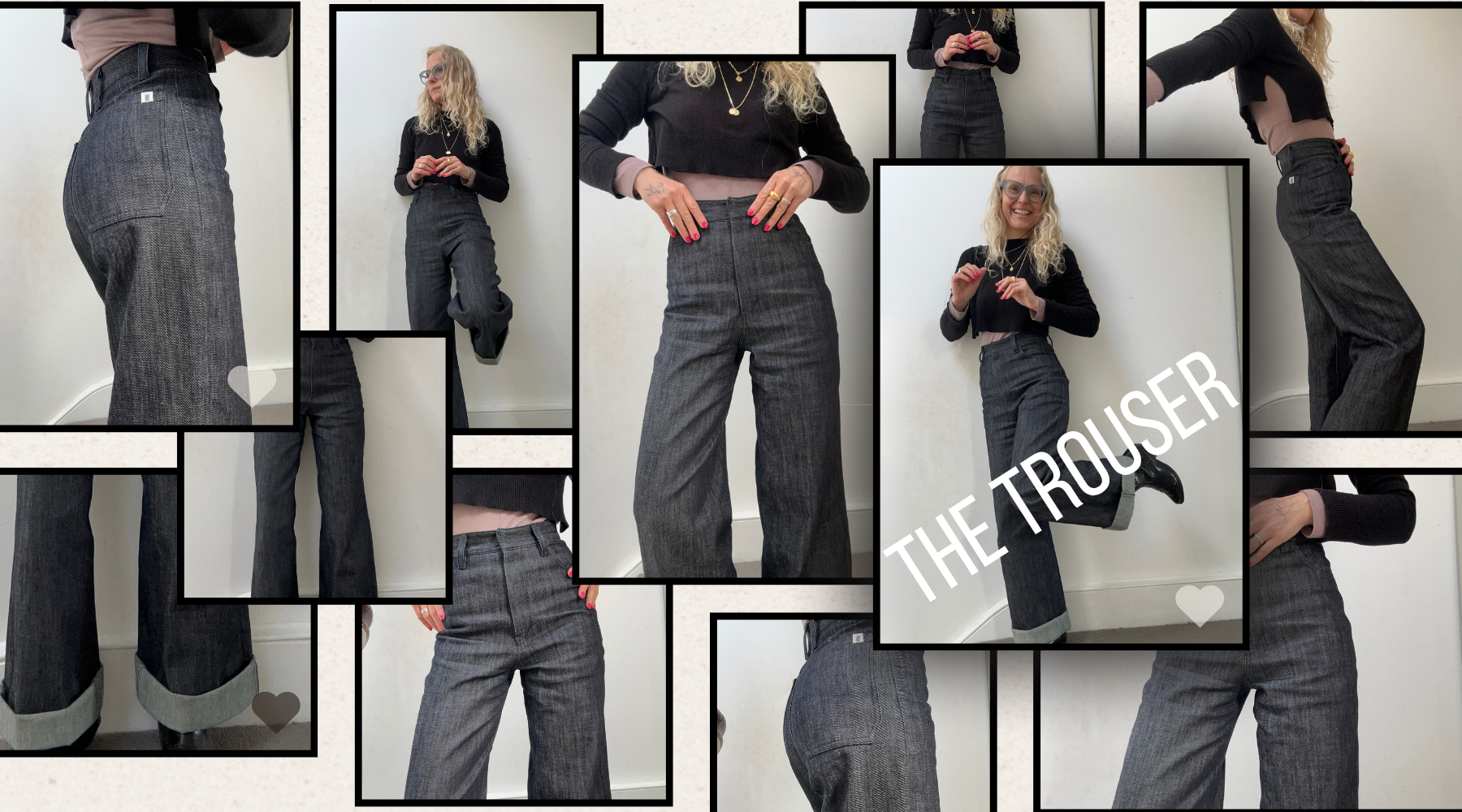
Everything we have talked about in this guide shaped how we built the No More Nobody wide leg jean. We started from the principle that jeans should be a generational piece the kind of trouser a woman wears for a decade and then hands down, or keeps forever. We chose a deadstock Japanese denim at a weight that drapes cleanly without stiffness. We designed a genuine high rise of thirty-one centimetres, which reads as a true high waist on most UK sizes. We kept the stretch content below two per cent, and only used it to give a small amount of recovery, not to carry the silhouette.
The waistband is interfaced internally and reinforced at the centre back so it does not collapse over time. The rivets and hardware are recycled. The leg line was drafted to break just on the instep when worn with a low shoe and to kiss the floor with a heel the classic fashion editor length. We offer the jean in long and regular lengths, not out of marketing tradition, but because we know a hem that is two inches off ruins the whole effect.
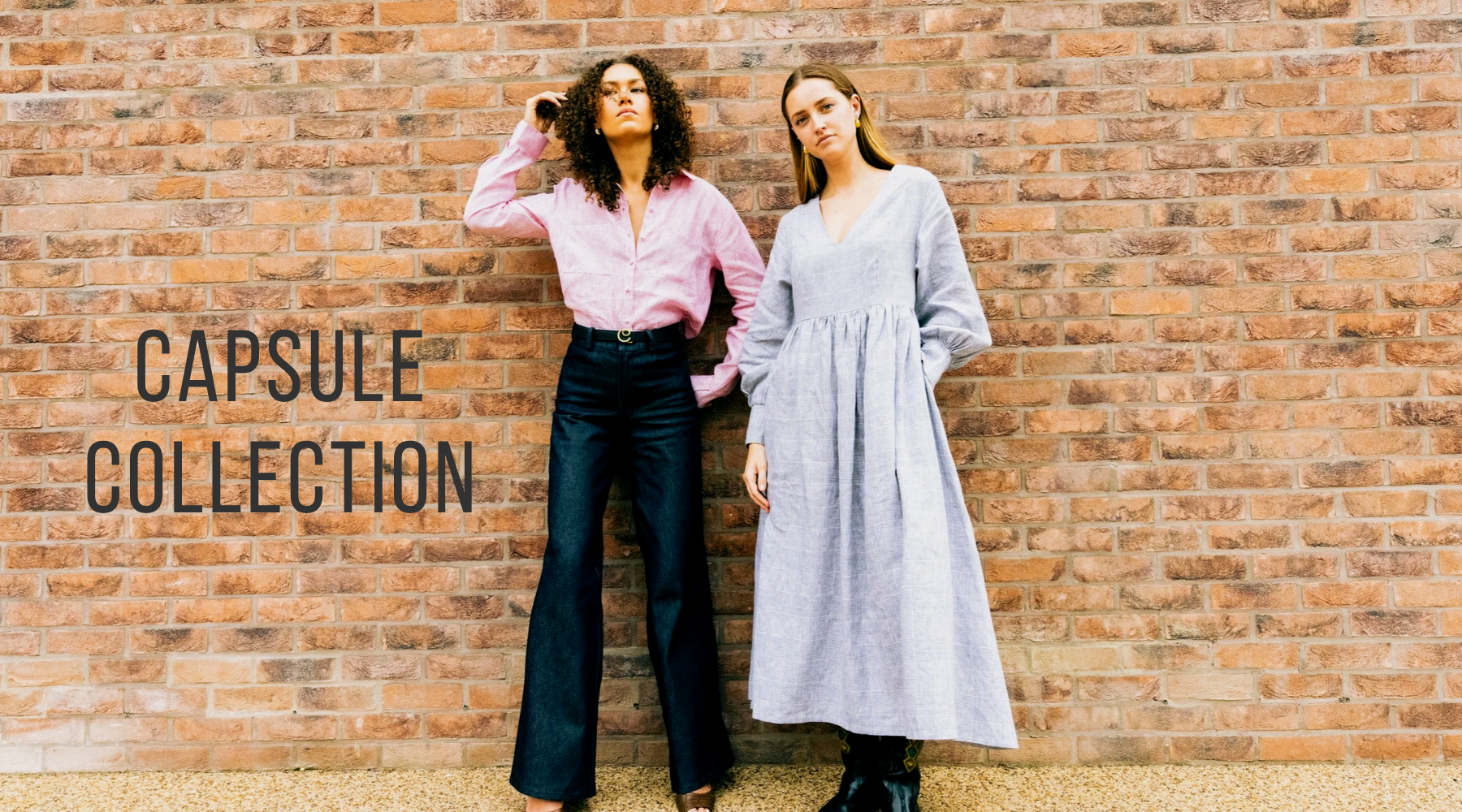
The result is a jean that passes every test in this guide. It sits, it walks, it travels, it ages. It pairs with the No More Nobody Rene shirt, the Irish linen blouses, the silver jewellery, the knits. It is the anchor of a capsule wardrobe, and it is built to outlive any trend that comes for denim next.
This is what we mean when we say that fit is the secret to sustainable style. Sustainability is not just about the fibre or the factory. It is about how often the piece gets worn, how well it is made, and how long it stays in your wardrobe. A trouser that fits perfectly is the most sustainable trouser you can own, because you will keep reaching for it long after everything else has been retired.
The trouser is the hardest garment to get right and the single biggest reason most wardrobes underdeliver. But once you understand the anatomy rise, fabric weight, stretch, waistband, hem and once you find a brand that cuts with care, it becomes the most rewarding investment you can make in your style.
A great trouser is not a compromise between comfort and tailoring. It is the proof that both can exist in the same garment. It is the reason you stop filling your wardrobe with cheap substitutes, and start feeling like yourself in the morning. It is the first real step towards a capsule wardrobe that works.
If you take only one lesson from this guide, let it be this: stop buying three pairs of mediocre trousers a year, and save for one pair of exceptional ones. Your body will thank you, your style will thank you, and the planet will thank you every time you reach for them instead of the landfill alternative.
At No More Nobody we believe the ultimate trouser is not a fantasy. It is a combination of honest tailoring, proper fabric and a fit that respects the real shapes of real women. Find yours and everything else in your wardrobe will finally start to make sense.
Written by Monisha Hasigala Krishnappa

Leave a comment
This site is protected by hCaptcha and the hCaptcha Privacy Policy and Terms of Service apply.