


The Mathematics of Style: How to Build a Carbon-Literate Capsule Wardrobe
We love to believe that a great wardrobe is about choice. Endless choice. Rails of options. A shirt for every mood, a trouser for every meeting, a dress for every event that might, theoretically, one day appear on our calendar. And yet, if you have ever stood in front of a full wardrobe and said the familiar words I have nothing to wear you already know the truth. A great wardrobe is not about having more. It is about having the right things, in the right proportions, that work in the right combinations.
This is what we call the mathematics of style. It is the quiet formula behind the women who always look pulled together. It is the reason a fashion editor can travel for three weeks with a carry-on, and the reason a certain kind of customer looks expensive in jeans and a white shirt while the rest of the world tries to recreate her look with ten times more stuff. A capsule wardrobe is not a trend, and it is not a minimalist punishment. It is an investment strategy, a climate strategy, and a style strategy, all in one.
In this guide we are going to break down the numbers. We will look at why most wardrobes fail, what a carbon-literate capsule actually looks like, the five hero pieces that create twenty or more outfits, and the No More Nobody formula that makes dressing simple again without sacrificing beauty, craft or meaning.

The 80/20 Rule of Getting Dressed (and How to Fix It)
Almost every wardrobe in the UK follows the same secret rule. We wear twenty per cent of our clothes eighty per cent of the time. The other eighty per cent hangs there, gathering dust, gathering guilt, and quietly costing us money, space and peace of mind. Research from sustainability charities and second-hand platforms has been saying this for years, and a quick audit of your own rails will prove it in about five minutes.
The question is not whether this is true. The question is why. The honest answer is that most of us do not buy our wardrobes on purpose. We buy them by accident. A sale dress here. A trend jumper there. A pair of trousers we thought we would wear to the office that does not have a dress code anyway. A going-out top for a night that never happened. Each individual purchase feels small, but across a year it adds up to a wardrobe that is bloated in the middle and missing at the edges.
A carbon-literate capsule wardrobe turns this rule on its head. Instead of letting eighty per cent of your wardrobe sit idle, you design the twenty per cent on purpose. You choose pieces that are engineered to work hard, to layer, to pair with anything, and to last. You are not buying less for the sake of less. You are buying less because less, when it is the right less, does more.
The starting point is an audit. Put everything you own on the bed, on the floor, on the sofa. Sort into three piles: things you love and wear, things you love and never wear, and things that do not really belong to the person you are today. Only the first pile stays as it is. The second pile is where the style clues live, because it usually contains beautiful things you cannot build an outfit around. The third pile is your teacher, because it tells you exactly which mistakes to stop repeating.
What is a Carbon-Literate Capsule Wardrobe?
A traditional capsule wardrobe is about number. Thirty pieces, thirty-three items, ten outfits, five colours you have seen the formulas. A carbon-literate capsule wardrobe is about impact. It starts from the same idea of fewer, better pieces, but it measures the wardrobe through a climate lens as well as a style one.
The logic is simple. Every garment you buy carries a CO₂e cost, from fibre to finish to freight. Cheap, synthetic, trend-led clothing is not just bad for your bank account it has a disproportionately large carbon footprint per wear, because it was designed to be worn only a handful of times. A well-made linen shirt, a real pair of tailored trousers or a sterling silver chain, by contrast, have a large one-off carbon cost that is divided across hundreds, sometimes thousands, of wears. The longer something lives, the smaller its annual emissions become.
So a carbon-literate capsule wardrobe has three non-negotiables. First, the pieces are made from materials that were grown, woven or recycled with care organic cotton, Irish linen, deadstock fabrics, recycled sterling silver, gold vermeil. Second, they are built to last, which means fabric weight, construction quality and classic silhouettes that do not date. Third, they are built to combine, so that every piece in the capsule pairs with at least three others.
This is where the maths get exciting. A capsule of twenty pieces chosen this way can easily deliver more than fifty distinct outfits, and when you start adding seasonal rotation, layering and accessories, the number climbs higher still. The sustainability gain is not just in buying fewer items. It is in wearing each one more often, so the per-wear carbon cost of your entire wardrobe quietly drops, year after year.

The 5 Hero Pieces That Create 20+ Outfits
A wardrobe does not need to be huge to be generous. If you choose the right five hero pieces, you can comfortably style yourself for a month without repeating an outfit. These are the anchors everything else in your capsule leans on.
The first hero is the perfect tailored plain or stripe shirt. Not a trend-season one. Not the floral print one from a rushed online order. A proper cotton or deadstock linen shirt, cut with a generous cuff and a collar that holds its shape. It tucks into trousers. It wears open over a cami. It layers under a knit. It is your uniform when nothing else is working.
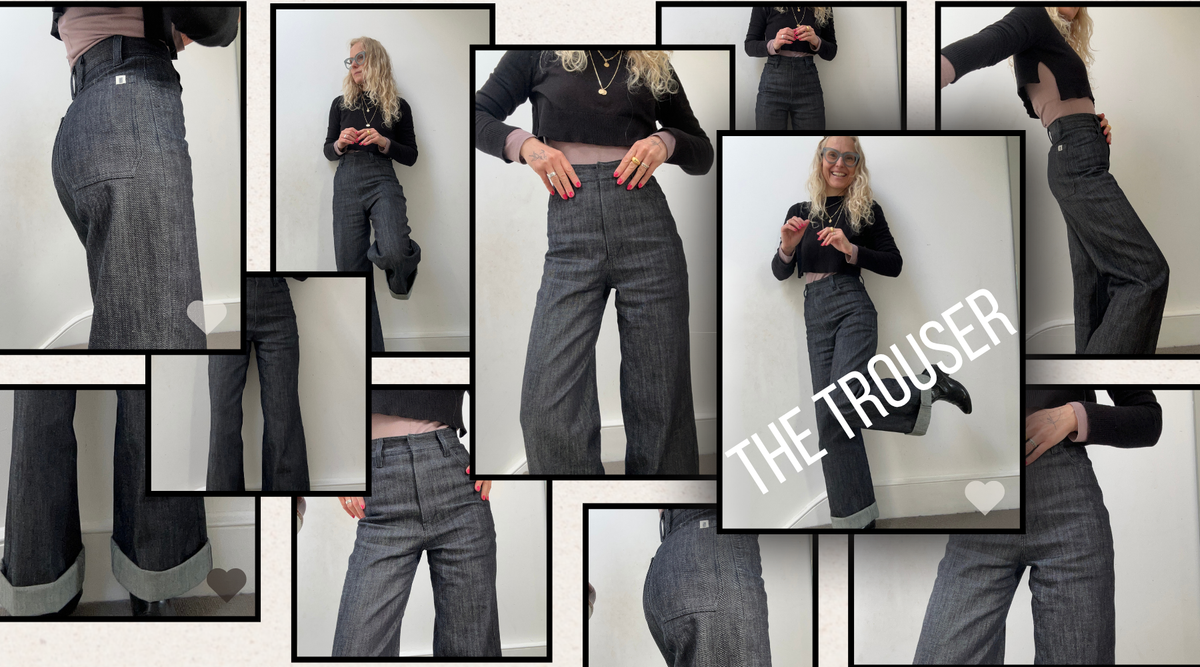
The second hero is the ultimate pair of trousers. For most women that is a wide-leg tailored trouser or a high-rise, long-length jean in a clean wash. This is the piece that carries you through boardrooms, school runs, restaurants and flights. Choose a fabric with weight wool blend, heavy cotton, deadstock denim and hem it to the floor when you are in your tallest shoes. Fit, not fabric alone, is what makes these trousers a hero.
The third hero is a lightweight knit. Not a bulky jumper, but a fine-gauge piece in wool, cotton or cashmere that can slide under a blazer, layer over a shirt, or stand alone with jeans. In beige, navy, black or cream, it becomes a chameleon.
The fourth hero is a dress that does not look like you are trying. A midi dress in linen, a bias-cut midi, or a simple shirt dress in deadstock cotton. Choose a neutral that you love, and it will serve you for work, weddings, weekends and dinners.
The fifth hero is the layering piece a blazer, a trench, or a structured shacket, depending on your life. It lifts anything underneath it. A capsule without a tailored outer layer is a capsule that only works indoors.
How to Bridge Work and Weekend Dressing
One of the quiet lies of modern fashion is that you need a separate wardrobe for every part of your life. Work clothes. Weekend clothes. Holiday clothes. Event clothes. Gym clothes that have somehow become going-out clothes. If you are spending money five times over to be the same person in five different places, something is not adding up.
A carbon-literate capsule is built on the idea that one body, one lifestyle, and one set of good pieces can travel between all these worlds with nothing more than a swap of accessories and shoes. The tailored trouser that anchors a meeting on Tuesday becomes the relaxed trouser with a silk cami and silver hoops on Friday. The white shirt that wears beautifully with a suit on Monday is rolled up over a linen scrunchie and wide-leg jeans on Saturday.
The trick is to stop categorising clothes by occasion and start categorising them by shape, weight and mood. A structured blazer over a T-shirt is a work outfit. The same blazer with jeans and a pair of flats is a weekend outfit. A linen midi dress with trainers is brunch; with heels it is a summer wedding. You are not underdressing. You are letting the same beautiful things do more for you.
If you have been struggling to pull this off, it is usually because the base pieces are not strong enough. Cheap trousers cannot carry both worlds. A shirt in a flimsy fabric will always look like it belongs in one place and not the other. Spend your budget on the items that will be working across both sides of your life, and save money on the smaller pieces that sit in one category only.
How to Choose Silhouettes That Stand the Test of Time
The hardest part of building a capsule wardrobe is not restraint. It is taste. And taste, fortunately, is a skill you can build. The easiest way to start is to study the silhouettes that have survived every micro-trend of the last fifty years. A wide-leg trouser. A clean white shirt. A slip dress. A crew-neck knit. A trench coat. A pair of loafers. A small gold hoop. None of these ever really leave the stage. They are the characters every decade keeps coming back to, in slightly different scripts.
This does not mean your wardrobe has to look boring, or that you have to dress like a caricature of a capsule editorial. It means that when you invest your budget, you put it into these long-lived shapes, and you let trend-led colour, styling and accessories happen at the small-ticket end of the wardrobe. A bold scrunchie, an unusual earring, a new shade of lipstick these are cheap, low-carbon ways to feel current without re-buying everything.
A good test before any purchase: would I still want to wear this in five years? If the answer is no, put it back. Trend buys do not belong in your capsule layer. They belong in the small, flexible layer on top, and ideally they come into your life second-hand so that their carbon cost is close to zero.
Another useful rule is to trust your own proportions, not the catwalk. A capsule that is built around your actual height, shape and lifestyle will always outperform a capsule built around a fantasy version of yourself. If you are tall, long lines will always flatter you. If you are petite, consider the way hems and necklines interact with your natural proportions. If you work from home, you do not need fifteen blazers. Be brutally honest about how you live, and the capsule will build itself.

The No More Nobody Capsule Formula
At No More Nobody, we design each piece with this maths in mind. We ask: how many outfits can this shirt create? How many hero pieces already in your wardrobe will these jeans pair with? How many years of wear can we confidently promise? The formula we live by is simple five heroes, five supporting pieces, five accessories, and one outerwear anchor.
The five heroes are the ones we have already covered: the white shirt, the wide-leg jean or trouser, the fine knit, the easy dress and the tailored outer layer. The five supporting pieces are quieter, but just as important. A softly cut T-shirt in organic cotton. A pair of straight-leg trousers or a skirt in a seasonal fabric. A cami or tank that can layer invisibly. A second shirt in a different colour or texture. A pair of denim that is not your hero jean perhaps a slouchier cut, or a deeper indigo.
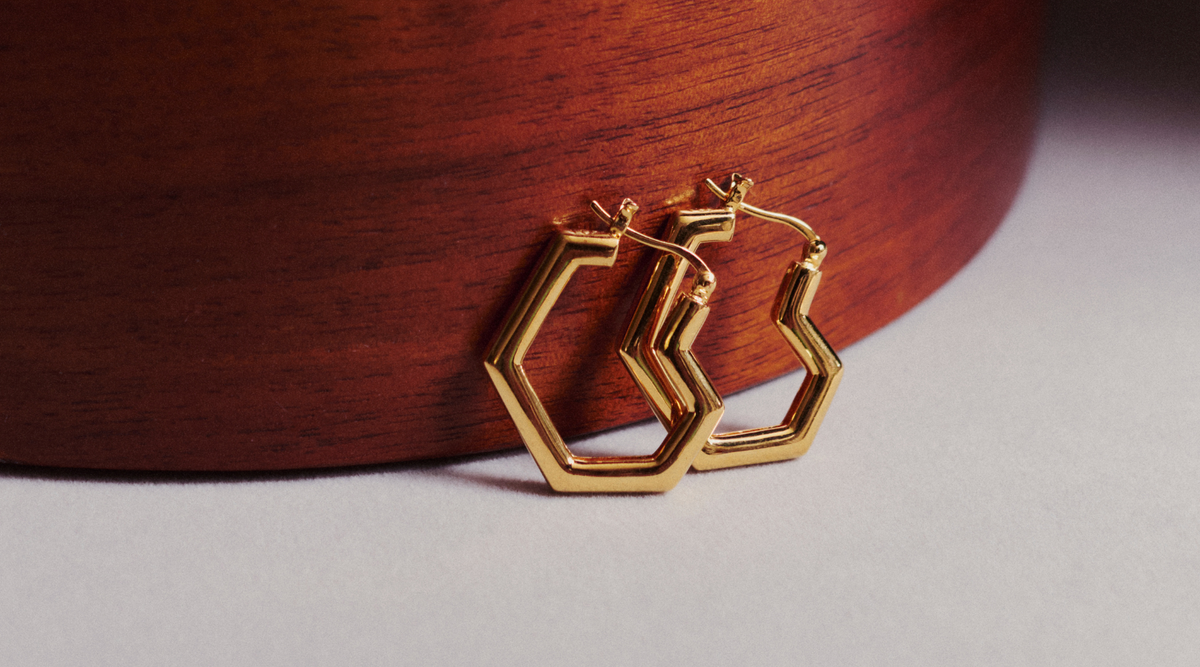
The five accessories are where personality lives. Silver hoops you never take off. A recycled sterling silver chain that wears alone or layered. A cotton or linen scrunchie in a print you love. A good leather belt. A scarf or a bag that earns its place. These are the small, low-carbon updates that make the capsule feel yours.
The final anchor is a single, perfect outerwear piece. Trench, blazer, or coat one. Not three, not five. The one you reach for ninety per cent of the time. If you can afford to build a capsule slowly, this is the last piece you should invest in, once you know what you actually wear.
Together, these sixteen items will give you a wardrobe that works through every season with only a few trans-seasonal swaps, that travels beautifully, that looks elevated without effort, and that keeps its carbon cost quietly falling each year. You are not dressing less. You are dressing smarter.
A capsule wardrobe is not a minimalist trend. It is the mathematics of style. It is the quiet art of choosing pieces that do more with less, that last longer than the seasons they were bought in, and that leave a smaller footprint on the planet without asking you to give up the pleasure of looking good. The eighty per cent of your wardrobe that you currently ignore is not telling you to buy more. It is telling you to buy better.
Start small. Audit what you have. Identify your heroes. Let the pieces you love teach you which silhouettes, fabrics and colours actually suit your life. Invest slowly in the gaps, and choose brands that are honest about where their clothes come from and how they were made. The dividend is not just a better-looking wardrobe. It is less stress every morning, fewer panicked online purchases, more money for the things that truly matter, and a climate footprint that shrinks with every additional wear.
At No More Nobody we believe a wardrobe should make you feel like yourself, not like someone else’s algorithm. A carbon-literate capsule is how you get there. Five heroes, five supporters, five accessories, one anchor and a lifetime of dressing with ease.
Written by Monisha Krishnappa

Leave a comment
This site is protected by hCaptcha and the hCaptcha Privacy Policy and Terms of Service apply.