

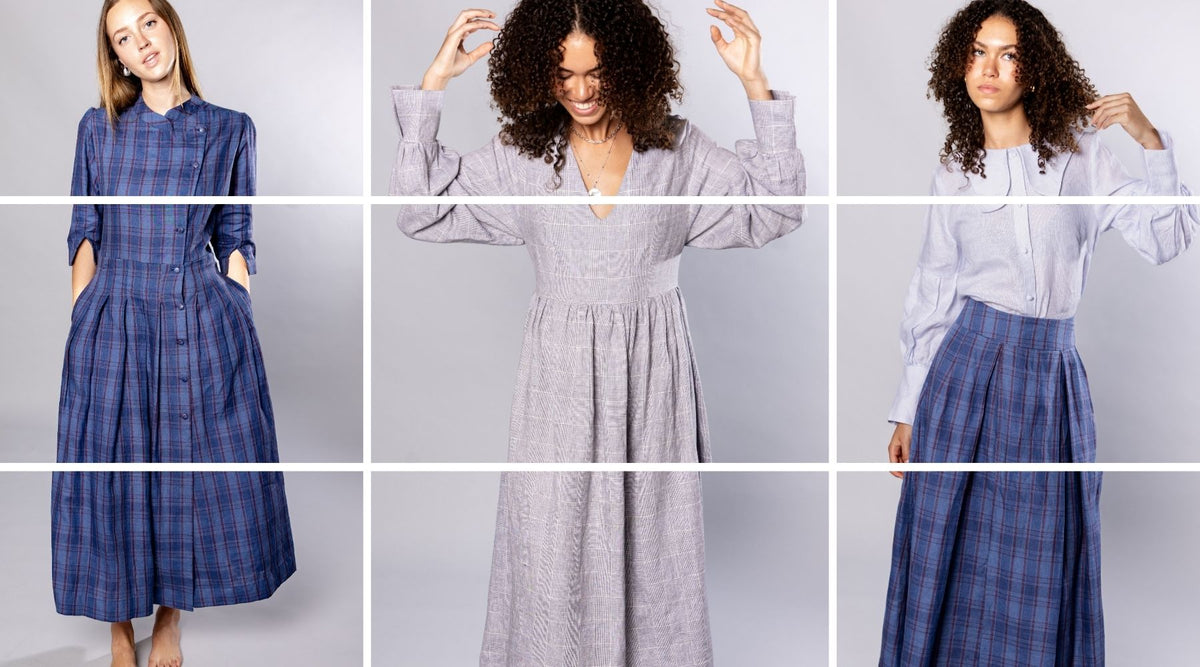
Is Recycled Polyester Really Sustainable? A Guide to Stylish, Ethical Alternatives
If you’ve bought anything labelled “sustainable” in the last few years, chances are it proudly said:
“Made from 14 recycled plastic bottles.”
It sounds heroic. Responsible. Clean.
But is recycled polyester (rPET) really sustainable?
The honest answer? It’s complicated.
Yes, rPET reduces certain production impacts. Yes, it diverts plastic bottles from landfill. But it also quietly keeps some of fashion’s biggest problems intact. Sometimes it’s progress. Sometimes it’s greenwashing convenience dressed up as innovation.
So let’s unpack it properly, beyond the marketing glow.
Why Recycled Polyester Took Over “Eco” Fashion
Recycled polyester dominates eco fashion for one simple reason: it’s easy.
There are 60 million tons of textile waste generated every year. There are mountains of plastic bottles available as feedstock. Existing polyester factories don’t need major retooling to process rPET. Brands can plug it straight into existing global supply chains.
And the story sells beautifully.
“This jacket saved 14 bottles.”
That sentence is emotionally powerful. It feels measurable. Tangible. Reassuring.
From a business perspective, rPET delivers around 80% of virgin polyester’s technical performance at 20–30% lower production cost. That’s ideal economics for fast fashion launching “sustainable collections” without touching the real issue: overproduction.
That’s the part no one wants to lead with.
What Recycled Polyester Actually Is
Recycled polyester usually comes from two sources:
Post-consumer rPET (around 60%)
Plastic bottles are sorted, shredded into flakes, washed aggressively, melted at 260°C, and extruded into yarn.
Pre-consumer scrap (around 40%)
Factory waste pattern offcuts, faulty fabric rolls, production leftovers mechanically recycled into new yarn.
Here’s the critical thing:
Chemically, rPET is identical to virgin polyester.
It stretches the same. Drapes the same. Dyes the same.
And sheds microplastics at the same rate when washed.
The recycling symbol creates the feeling of a “second life.” But in reality, it’s still plastic. It still won’t biodegrade. It still persists in landfill for 200+ years.
And right now, global rPET production only covers 1–2% of total polyester demand while polyester still holds 72% of the global fiber market.
Recycling alone cannot outrun consumption.

Recycled Polyester: Complete Impact Comparison Table
For geek, if you want to get all the stats.
|
Impact Area |
Recycled Polyester (rPET) |
Virgin Polyester |
Organic Cotton (GOTS) |
Linen (Flax) |
Hemp |
|
CO2 Emissions (kg CO2e/kg) |
1.6 |
3.4 |
2.1 |
1.2 |
0.8 |
|
Water Use (liters/kg) |
25 |
25 |
7,600 |
300 |
500 |
|
Microplastics |
High shedding |
High shedding |
None |
None |
None |
|
Biodegradability |
Never (200+ years) |
Never |
Compostable |
Compostable |
Compostable |
|
Pesticides/Chemicals |
None |
Petrochemicals |
None |
None |
None |
|
Land Use (m²/kg) |
Minimal |
Minimal |
7.5 |
2.5 |
1.5 |
|
Recycling Cycles |
3 maximum |
Never recycled |
Compostable |
Compostable |
Compostable |
|
Garment Cost Index |
Medium |
Low |
High |
Medium |
High |
Where rPET Actually Performs Better
Let’s give it credit where it’s due.
Recycled polyester does deliver real improvements:
-
50–75% lower CO2 emissions than virgin polyester (1.6 kg CO2e/kg vs 3.4)
-
70,000 plastic bottles diverted per metric ton
-
Reduced crude oil demand
-
Identical technical performance to virgin polyester
Brands like Adidas, Patagonia, and H&M have integrated rPET widely. When used strategically, it’s better than virgin polyester.
That matters.
The Problems rPET Doesn’t Solve
But here’s what doesn’t change:
-
It sheds microplastics roughly 500,000 fibers per wash.
-
It does not biodegrade.
-
Fiber quality degrades with each recycling cycle (maximum three).
-
It keeps polyester dominant in a system that already overproduces.
And the math is sobering.
Average polyester consumption per person: 59kg annually.
Global demand: 472 million tons.
Global rPET capacity: 8 million tons.
Recycling cannot keep pace with growth.
When Recycled Polyester Makes Sense
There are categories where rPET is genuinely useful.
-
Performance activewear that requires stretch and moisture-wicking.
-
Waterproof outerwear shells.
-
Synthetic insulation fills.
-
Technical workwear.
In these areas, natural fibers struggle to match performance.
But for investment coats? Dresses? Skirts? Tailoring?
There are better options.

Better Fabric Alternatives (Prioritised)
If you’re building a wardrobe intentionally, here’s the smarter hierarchy.
Tier 1: Natural Fiber Foundation (60%)
-
Linen – Zero irrigation, zero pesticides, incredibly durable. Hello, No More Nobody!
-
Hemp – High yield per acre, naturally antibacterial.
-
Organic cotton (GOTS) – No synthetic pesticides.
-
Regenerative wool – Can actively improve soil health.
These biodegrade. They age beautifully. They don’t shed microplastics.
Tier 2: Performance Naturals (25%)
-
Tencel Lyocell – Closed-loop production, silk-like drape.
-
Modal (eucalyptus) – Soft, lower water impact.
-
Organic merino wool – Excellent for base layers and sport.
Tier 3: Certified Next-Gen Synthetics (10%)
-
Bio-based nylon (castor oil-derived)
-
Sorona (partially plant-based polyester)
Used selectively.
Tier 4: Secondhand Synthetics (5%)
If plastic already exists, extending its life beats making more.
How to Spot Real Progress (And Avoid Greenwashing)
Look for:
-
Global Recycled Standard (GRS) certification
-
Exact percentage claims (“72% post-consumer rPET”)
-
Durability guarantees
-
Repair services
-
Clear washing instructions addressing microplastic shedding
Be cautious of:
-
“Made with recycled materials” (often 1–10%)
-
“Eco polyester” with no certification
-
Bottle imagery without data
-
“Sustainable collection” labels covering only a small percentage of total output
If there’s no transparency, it’s marketing.
Garment-by-Garment Reality Check
-
Coats & jackets? Choose wool or organic cotton canvas.
-
Trousers? Hemp or organic cotton.
-
Dresses & blouses? Linen, Tencel, organic silk.
-
T-shirts? Hemp or organic cotton.
-
Underwear? Organic merino or Modal.
-
Activewear? This is where certified rPET makes sense.
Context matters.

Garment type Fabric Priority Decision Matrix
|
Garment Type |
Priority Fabric Choice |
rPET Acceptability |
Second Choice Alternative |
Completely Avoid |
|
Coats/Jackets |
Wool/Linen Canvas |
Never |
Organic Cotton Canvas |
rPET entirely |
|
Trousers |
Hemp/Organic Cotton |
Never |
Tencel Twill Blend |
rPET versions |
|
Dresses/Blouses |
Linen/Tencel Modal |
Never |
Organic Silk |
rPET garments |
|
Activewear |
rPET (GRS Certified) |
Acceptable |
Organic Merino Wool |
Conventional cotton |
|
T-Shirts |
Hemp/Organic Cotton |
Limited use |
Tencel Jersey |
rPET dominance |
|
Underwear |
Organic Merino/Modal |
Never |
Organic Cotton |
rPET materials |
|
Denim Jeans |
Organic Cotton |
Never |
Hemp Denim Blend |
rPET stretch |
The 30-Second Shopping Test
Before you buy:
-
Is it GRS certified with clear percentage?
-
Is there a natural fiber alternative?
-
Does performance justify synthetic?
-
Are washing instructions clear?
-
Is durability guaranteed?
-
Is there a takeback or repair program?
If two or more answers are “no” walk away.
The Bottom Line
Recycled polyester is not a villain. But it’s not a hero either.
It’s a transitional material.
Natural fibers outperform it long term.
Secondhand outperforms it completely.
Reducing consumption beats both.
A smarter 2026 wardrobe might look like:
-
70% natural fibers (linen, hemp, organic cotton, regenerative wool)
-
20% certified rPET (activewear only)
-
10% secondhand synthetics
One well-worn linen coat beats five recycled polyester jackets every time.
At No More Nobody, we build differently. We work with organic fibers, reclaimed materials, and circular thinking because sustainability isn’t about looking good on a tag. It’s about lasting.
Reclaim what already exists. Choose better materials. Wear them longer.
That’s the real shift.
Written by Monisha Krishnappa and Silva Hrabar-Owens



Leave a comment
This site is protected by hCaptcha and the hCaptcha Privacy Policy and Terms of Service apply.